

The Plastics Litigation Tracker offers a searchable database of federal and state court cases addressing plastic products and pollution, for legal researchers

Chatham House Circular Economy Policy Tracker maps global circular economy policies and resource trade dynamics, aiding researchers and policymakers in understanding transitions.

Global Plastic Laws is an extensive database of plastic legislation worldwide, assisting policymakers, researchers, and advocates in understanding global plastic policy

LitChemPlast is an open database compiling chemo-analytical measurements of chemicals in plastics from raw materials, products, and waste streams

Browser-based Streamlit app that helps researchers explore microplastics trends across NIH grants, preprints, and conference proceedings

Systematic review extracting where, when, and what to measure for microplastics in rivers and estuaries from 173 laboratory studies published 2014–2024

An open-access dashboard database providing science-based data on plastic ingestion by marine, freshwater, and terrestrial wildlife.

Meta-analysis of 36 river microplastic studies with quality scoring framework for water column and benthic sediment sampling standardization

Interactive educational resource translating PlasticHeal research on micro- and nanoplastics health effects for primary and secondary school students

Open-source computer vision method using YOLOv12n object detection to measure spherical microplastic settling velocity in water columns with 6–7% accuracy

Self-guided platform and protocol for analyzing beach litter sources and pathways in the Arctic, along with living database

Python-based particle detection and Raman spectroscopy automation for identifying microplastics in the 20–53 µm size range, with validation data and code

Crowdsourced microplastic detection in drinking water using Nile Red fluorescence staining and public mapping. Open dataset for tap and filtered water.

Raman and μATR-FTIR spectral library for identifying bioplastics in environmental samples, covering 8 polymer types with 79–96% detection accuracy

TRADE is a platform that standardizes community-based rapid trash assessments for MS4 stormwater monitoring, visualization, and downloadable reporting-ready datasets.

The River-OSPAR Plastics Dataset contains >229k litter items collected from 4 continents with mass, volume, density, dimensions, and categorization.

MicroTrack sampling devices for microplastics: SDW01 tap-water nozzle, SDAIR02 air pump sampler, SDSW03 marine depth sampler via drone.

RShiny web app for site-specific ecological risk characterization fitting microplastic data into Bayesian Species Sensitivity Distribution-based risk.

Capture Tech by CAPTOPLASTIC is a continuous, in-line microplastics capture system based on agglomeration, using a reusable “capturer/collector” material to bind microplastics into aggregates that...

MP-SED is a microplastics database for sediment contamination and environmental monitoring research maintained by the U.S. Army Corps of Engineers.

One4All is an open-source portal and R package for validating, structuring, and sharing microplastics data- designed to accelerate FAIR data practices.

MaTCH is an AI-powered tool that harmonizes microplastics and trash datasets. Use the live app or open-source code to standardize plastic pollution data.

Harmonized reporting guidelines for microplastics studies – covering metadata, QA/QC, sampling, preparation, identification, quantification, and toxicology.

Authoritative sampling and QA/QC guidance on microplastics across matrices, covering contamination control, blanks, study design, and reporting best practices.

Educational resources and research products from the Lake Ontario Microplastics Center (LOMP) supporting microplastics science, monitoring, and outreach.

Open-source tool that uses Monte Carlo simulations to derive microplastics hazard thresholds by propagating uncertainty across particle traits and toxicity

MPSizeBase is an open-access database of microplastic size distributions for research, standardization, and data sharing. Contribute and explore now!

Web platform for exploring Canadian marine microplastics monitoring data to support standardized, policy-relevant decision making.

Web-based multimedia fate model simulating nano/microplastics distribution across air, water, soil, and sediment for exposure assessment and risk evaluation.

An open-access database of >10,000 necropsies and their associated macroplastic burden ins bin marine animals with a novel risk assessment framework.

Evidence-based roadmap describing how to radically reduce ocean plastic pollution by 2040 developed by The Pew Charitable Trusts and SYSTEMIQ

A corporate accountability scorecard report on plastics led by As You Sow and Ubuntoo.

An RShiny-powered minimalist web app to visualize spectra for SLOPP/SLOPP-e Raman libraries developed by Professor Andrew Rate, School of Agriculture and Environment, The University of Western Australia....

Free software that automates FTIR spectral data analysis for microplastic identification, combining user-friendly interface with high-speed processing.

A small RShiny-powered app that visualizes FLOPP/FLOPP-e spectra easily when not using instrument software.

A low-cost fluorescence method using Nile Red enables secondary students and citizen scientists to detect microplastics in sediments through hands-on STEM

A a low-cost portable microplastic detection system combining Nile Red staining and YOLOv8 deep learning. Unfortunately, authors have not released code or schematics, limiting reproducibility.

ISO-certified reference material for quantifying polyethylene terephthalate microplastics in drinking water, developed by the EU Joint Research Centre.

An open database and web map tool from NOAA that providesd access to aggregated global data on microplastics in marine settings.

Free environmental education lesson plans, classroom toolkits, activity guides, and more for all grade levels with a specific focus on ocean plastic pollution.

Commercially available microplastic fragments and fibers with published characterization data for QA/QC, method validation, and toxicity testing.

Consolidated database of >15,000 plastic chemicals from variuous sources, compiling hazard and other information, identifying plastic chemicals of concern.

Standard operating procedure for collecting microplastics samples in aquatic sediment and biota

Training video, method, parts list, and presentations for sampling microplastics in drinking water for regulatory use in California

Curriculum and toolkit for measuring microplastics for citizen scientists and students. Webpage is in Dutch.

The RSVP tool standardises statistical prediction of sufficient sample volumes, to ensure microplastics are detected with a given level of confidence.

A microfluidic tool capablen of rapidly characterizing particles (including microplastics) using electronic characteristics.

Fluorescence-based system that rapidly identifies microplastics in environmental samples using conjugated polymer nanoparticles.

In situ microplastics remediation device that utilizes magnetic field separation technology to remove microplastics and other particles from greywater.

Standardized kit containing 22 environmental plastic materials with ATR FTIR, DSC, and pyrolysis GC/MS spectral data for microplastic analytical method val

A book that that investigates the intersection of plastic pollution and the natural world through text and photographs in an artistic and scientific way.

Collection devices for floating plastics designed for urban areas.

Manual or autonomous floating waste collector device

Machine-learning based rapid & easy to use method for differentiating microplastics from natural particles in aqueous samples using flow cytometry.

Global database mapping ocean microplastic occurrence from researchers and governments worldwide, with interactive 2D visualizations of survey locations an

Free single-use plastic tracking mobile application created by Eckerd College professors to improve business sustainability.

Comprehensive database and report synthesizing evidence on 16,000+ chemicals in plastics, with hazard assessment and regulatory status for policy action.

Annual reports of amounts of virgin plastic and postconsumer recycled plastic used in beverage containers sold in California.

A static dataset of in vitro bioassay activity of chemical additives in food packaging. Includes data for pregnane X receptor (PXR), peroxisome proliferator receptor γ (PPARγ), estrogen receptor...
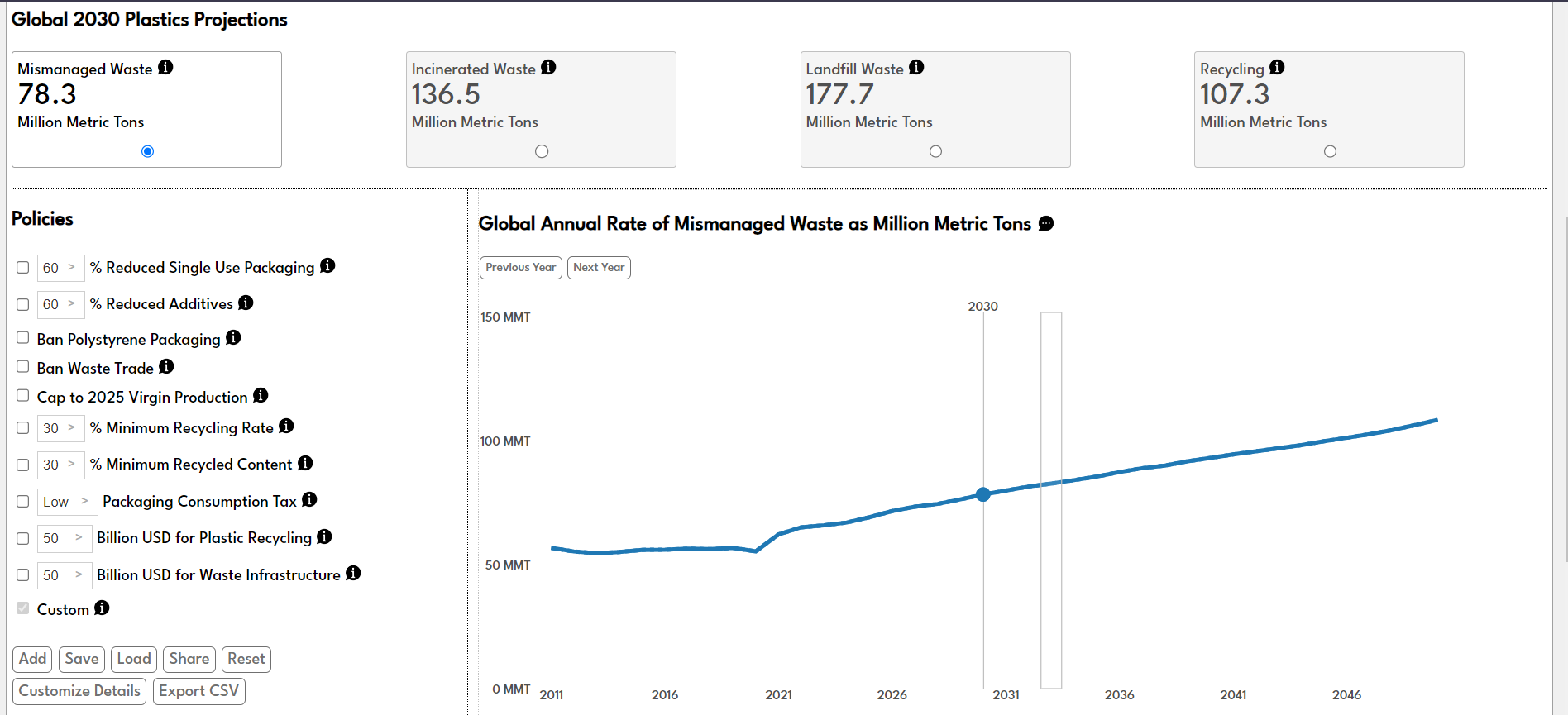
Countries are exploring ways to reduce the impact of plastic. This tool explores different policy interventions both regionally and globally.

Open-access repository archiving georeferenced environmental datasets including microplastics occurrence data across aquatic, terrestrial, and wastewater c
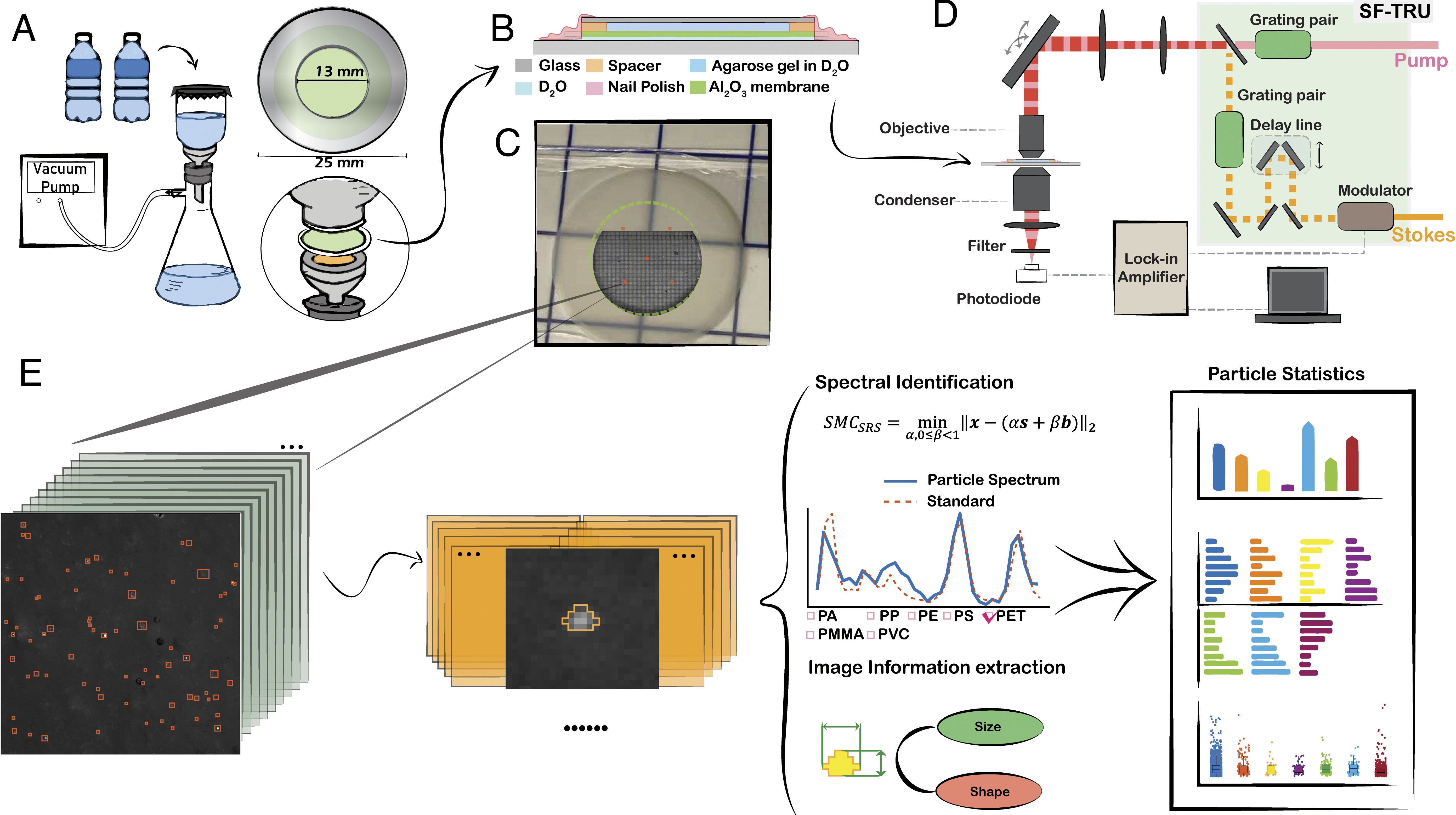
MATLAB algorithm for rapid single-particle chemical imaging of nanoplastics using stimulated Raman scattering microscopy and automated plastic identificati

CellProfiler and Python scripts for quantitative analysis of size/shape/colour of plastic debris. These scripts process photographs of plastic debris, detecting any objects present and measuring...

Python script that systematically color-corrects plastic debris photographs for accurate quantitative analysis across different camera setups and lighting

Open-source data portal mapping marine plastic pollution across Philippine coastal waters for local monitoring capacity.

Non-profit committed to removing trash from freshwater lakes in California and Nevada using underwater drones and other techniques.

Autonomous underwater vehicle designed for oceanographic work that can collect water samples for eDNA and other constituents.

Optimized high-throughput microplastics sampling method based on ASTM D8332, now published with supporting videos and field demonstrations.

Open training database, model, and analysis pipeline used in optimized workflow for identifying microplastics using near infrared hyperspectral imaging.

Long-running podcast focused on all aspects of plastic pollution by journalist Anja Krieger.

Toolbox and knowledge hub for decision-makers and scientists focsued on contaminants, nutrient, and carbon dynamics in temperate and polar coastal zones.

A prototype high throughput portable sensor for detecting microplastics based on Raman spectrometry.

TrashAI applies artificial intelligence to plastic pollution monitoring, supporting scalable analysis for research, policy, and environmental protection.
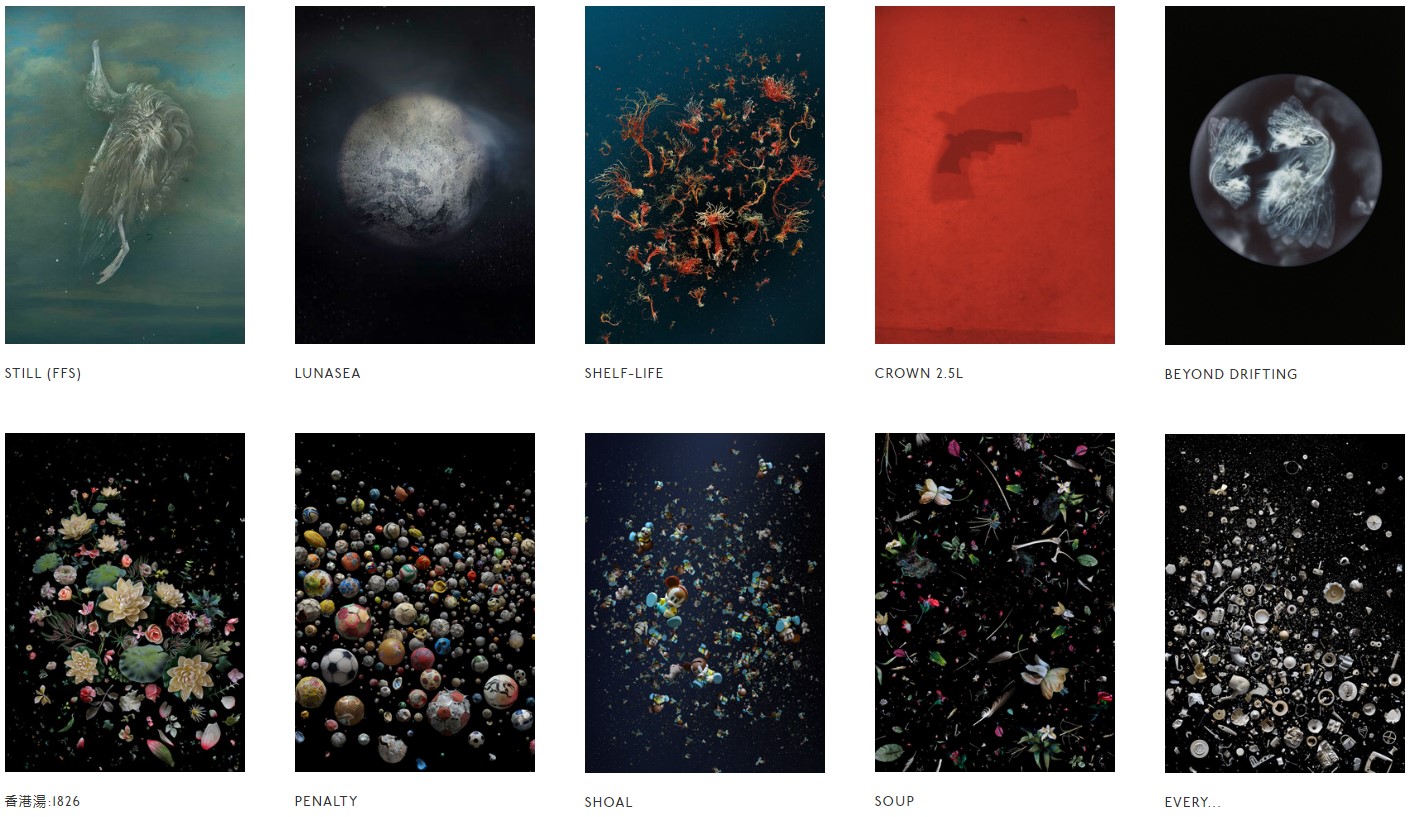
Extensive collection of art portraying marine plastic by world-renowned artist Mandy Barker.

Open access filterable database mapping >3,500 studies on plastic chemical exposure and human health impacts.

A machine-learning model that predicts (rough estimates) of micro- and macro-plastic abundance in rivers prior to sampling.
A gamified web survey collecting information to inform educational and outreach tools for marine debris.
A European Citizen Science Campaign in which school clasess and youth groups collect plastic samples from streams and rivers and document their findings.

Open database tracking quantitative company metrics on plastic packaging production, reusable alternatives, recycled content, and reduction targets worldwi

FRAGMENT-MNP is an open-source Python-based mechanistic model of Micro and NanoPlastic FRAGMentation in the ENvironmenT provided by UKCEH.

MATLAB-based model estimating in vitro dosimetry of particles

International standard for microplastic detection in drinking water (1–5,000 µm) using FTIR and Raman spectroscopy across 10 polymer types.

*Limited access* relational database for microplastics with controlled vocabulary and schema.

Free fact sheets from the Food Packaging Forum on plastic, paper, glass, and bioplastic packaging — chemical safety, migration, and recyclability.

Fact sheets on plastic pollution.

Hands-on lessons about microplastics pollution in wastewater treatment plants using a tabletop model.

15 interdisciplinary hands-on lessons and activities help students learn the different types of plastics, their impact on marine and freshwater ecosystems, and about ways to...

Detailed instructions for low-cost lesson plan (10th-12th grades) for conducting a citizen science laboratory investigation of microplastics

Quantum cascade laser infrared microscopy enables rapid polymer identification and morphological classification of microplastics across environmental matri

Open access publication and open source code for interpreting microplastics Raman spectroscopy using machine learning.

Washing machine microplastic filter removing >80% of fibers ≥50 µm from laundry effluent. Meets mandates in France, UK, California, and Canada.

River plastic interception using a diagonal bubble curtain. 86% catch rate in Amsterdam pilot; allows ship and fish passage; operates 24/7.

Program page for the University of Rhode Island’s “Plastics: Land to Sea” Initiative. Includes various resources, including news articles, events, and webinars.

Citizen science visual trash survey data conducted by Mystic River Watershed Association in Rhode Island, US.

Images from an immersive art installation made from 18,000 plastic cups to raise awareness.

List of resources for lessons plans and other educational resources for microplastics and plastic pollution grouped by grade.

A filterable web tool for selecting sampling methods for microplastics in various media.

Zero-emission beach cleaning robot by Poralu Marine that sifts sand to remove microplastics and debris down to 1 cm² without harming ecosystems.

Currently under development – a thin solid-state nanopore instrument designed for rapid and accurate monitoring of nanoplastics. Project funded by NOAA.

Queryable and interactive Tableau dashboard for environmental microplastics monitoring data.